How to Generate High-Quality Real Estate Leads in 2026
A practical, SEO-friendly guide for builders, developers, and real estate teams that want enquiries from serious buyers, not just inflated lead counts.
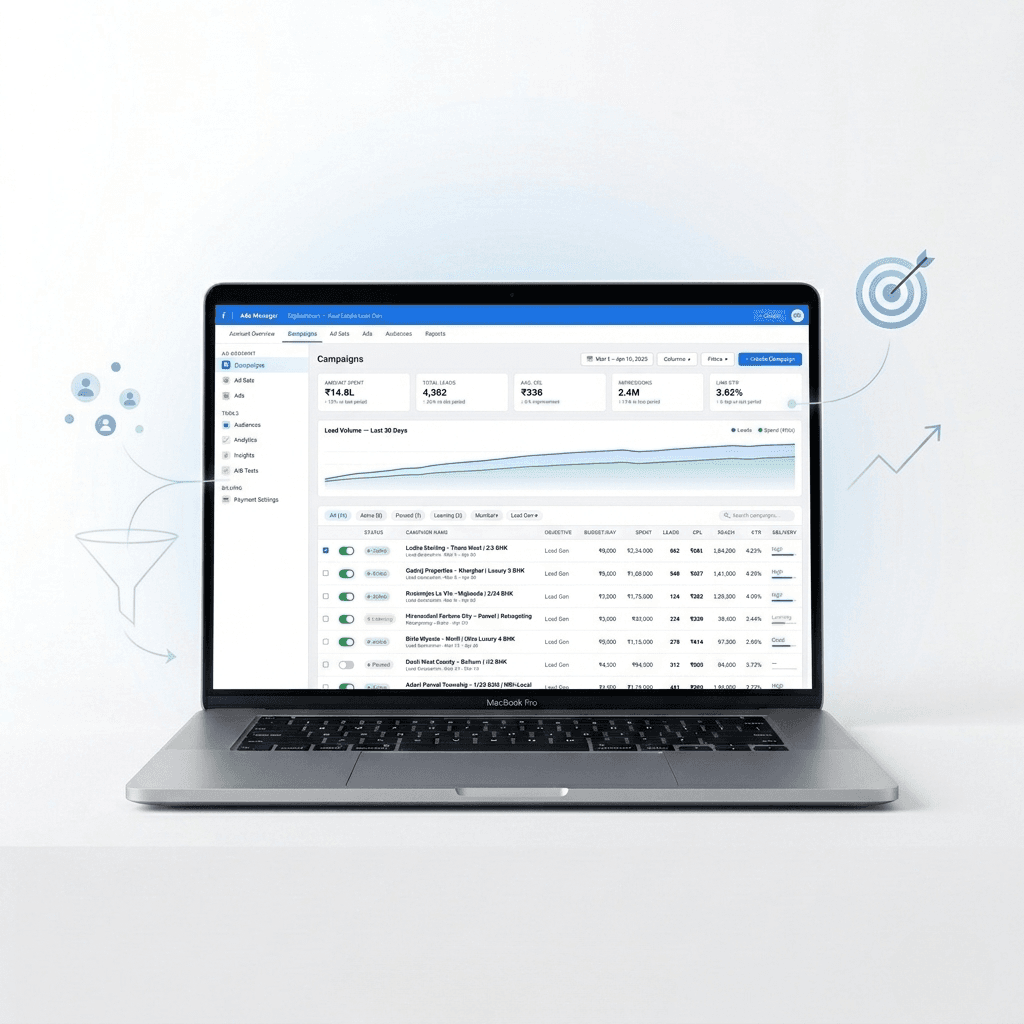
Real estate lead generation has changed dramatically. Buyers research online before they visit a site, compare projects across locations, check reviews, speak to multiple brokers, and expect quick answers on price, possession, amenities, and finance. In 2026, the winning real estate brands are not the ones collecting the largest number of form fills. They are the ones building a repeatable system that attracts high-intent buyers, qualifies them fast, and follows up with discipline.
Why Lead Generation Matters
For builders and developers, every project has a defined sales window. Inventory, cash flow, launch momentum, and channel partner confidence all depend on a strong pipeline. A professional lead generation system helps your sales team speak to buyers who are actively searching for properties in your price range and location. It also gives management visibility into cost per qualified lead, site visit rate, booking rate, and campaign return on investment.
Good lead generation is not only advertising. It is the alignment of targeting, messaging, landing pages, tracking, sales scripts, CRM follow up, and reporting. When these pieces work together, your campaigns stop feeling like a gamble and start becoming a predictable growth engine.
Quality matters more than volume
A campaign that produces 1,000 low-intent leads can waste more sales time than a campaign that produces 150 qualified enquiries. High-quality real estate leads usually have clear location interest, budget fit, buying timeline, contact accuracy, and a reason to engage. Your marketing should be measured against these signals, not against form submissions alone.
Google Ads Strategies
Google Ads is one of the strongest channels for real estate because it captures demand that already exists. Someone searching for "2 BHK flats in Thane", "luxury apartments in Gurgaon", or "new launch projects near metro" is showing intent. The role of your campaign is to appear for those searches with a relevant message and send the visitor to a page that answers their immediate questions.
Build campaigns around buyer intent
Separate campaigns by location, project category, and stage of intent. Branded searches, competitor searches, project type searches, and generic location searches behave differently. Each group should have its own keywords, ad copy, landing page, and budget expectations. This structure makes optimization easier because you can see which themes are producing qualified calls and site visits.
Use phrase and exact match for high-intent terms, then expand carefully with broad match only when conversion tracking is reliable. Add negative keywords for jobs, rentals, free listings, construction materials, and other irrelevant searches. Review search terms regularly because small leaks can become expensive at real estate CPCs.
Meta Ads Strategies
Meta Ads works differently from Google. Instead of waiting for a search, Meta helps you create demand through visual storytelling, audience signals, and retargeting. It is especially useful for new launches, premium positioning, amenity-led projects, location education, and remarketing to users who have already interacted with your brand.
Use creative that qualifies the buyer
Real estate creatives should do more than look attractive. They should communicate location, configuration, starting price, key amenities, possession stage, and a strong reason to enquire. If your ad hides the price range completely, you may generate more leads but lower quality. If your ad communicates the right project facts, your sales team gets fewer surprises and better conversations.
Test video walkthroughs, carousel ads, site progress updates, floor plan explainers, and testimonials. Build retargeting audiences from website visitors, Instagram engagers, video viewers, and lead form openers. Warm audiences often convert at a better rate because they have already seen the project once.
Landing Pages
Your landing page has one job: convert traffic into qualified enquiries. It should load quickly, look credible on mobile, and make the next action obvious. The page should include the project name, location, configurations, price indication, RERA details where applicable, amenities, connectivity highlights, gallery, map context, and a clear form or call button.
Match the page to the ad promise
If an ad promotes "3 BHK sea-facing residences", the landing page should immediately continue that story. Message mismatch increases bounce rate and lowers trust. Keep forms short, but ask enough to qualify the lead. Name, phone, preferred configuration, budget, and timeline can be more valuable than a generic name and number form.
Lead Qualification
Lead qualification protects the sales team from chasing every enquiry with the same intensity. A qualified real estate lead should be evaluated on budget, preferred location, configuration, purchase timeline, funding status, and level of project awareness. The faster your team separates hot, warm, and cold leads, the faster they can focus on conversations most likely to become site visits.
Call speed is a conversion advantage
Many buyers submit enquiries to multiple projects. Calling within the first few minutes can dramatically improve connection rate. Use auto-assignment, instant alerts, and predefined scripts so no lead waits in a spreadsheet. The first call should confirm interest, answer the biggest questions, and move the buyer toward a site visit or detailed consultation.
CRM Follow Up
A CRM is essential because real estate decisions are rarely instant. Buyers may need to discuss with family, compare locations, arrange finance, or wait for a launch offer. A structured CRM ensures every enquiry has a status, owner, next follow-up date, source, budget, and notes from the last conversation.
Build follow-up sequences for different stages. A hot lead may need a quick callback, brochure, pricing sheet, and site visit reminder. A warm lead may need project updates, location benefits, loan support, and urgency around limited inventory. A cold lead should still enter a nurturing sequence because their buying timeline can change.
Common Mistakes
The most common mistake is optimizing campaigns for cheap leads instead of qualified leads. Low cost per lead can look good in a report while producing poor sales conversations. Another mistake is sending every campaign to the same generic landing page. Buyers searching for different configurations, locations, and budgets need different messages.
Teams also lose performance when they ignore conversion tracking, skip negative keywords, use weak creatives, delay follow up, or fail to connect marketing data with sales outcomes. If you cannot see which campaigns produced site visits and bookings, you cannot confidently scale budget.
Conclusion
High-quality real estate lead generation in 2026 is a system. Google Ads captures active demand, Meta Ads builds awareness and retargets prospects, landing pages convert attention into enquiries, qualification protects the sales team, and CRM follow up turns interest into site visits and bookings. When every part is measured and improved, your marketing becomes more predictable.
If you want to go deeper into the highest-intent channel, read our complete guide to Google Ads for real estate builders and developers.
Back to Blog